Arabic draft translation quality is shaped by more than BLEU or headline model size. This guide explains how to choose between modern translation options and why post-editing discipline matters as much as the base model.

Choosing a multilingual embedding model for Arabic-English retrieval is not a leaderboard problem. It is a pipeline problem. This guide maps what to test before you trust any retrieval stack in production.
Arabic speech-to-text quality is not captured by a single error-rate number. This guide explains how to evaluate transcription systems for real editorial workflows, where speaker turns, latency, and repair cost matter as much as raw recognition.

The MCP conversation is moving fast, but the research signal is already clearer than the hype. Recent papers on audits, ecosystem attacks, malicious tools, and enterprise mitigations now point to the same conclusion: tool interoperability without policy discipline is fragile by default.
Building a global tech publication in English and Arabic needs more than translation. It needs a layered editorial system for search, transcription, and multilingual discovery.
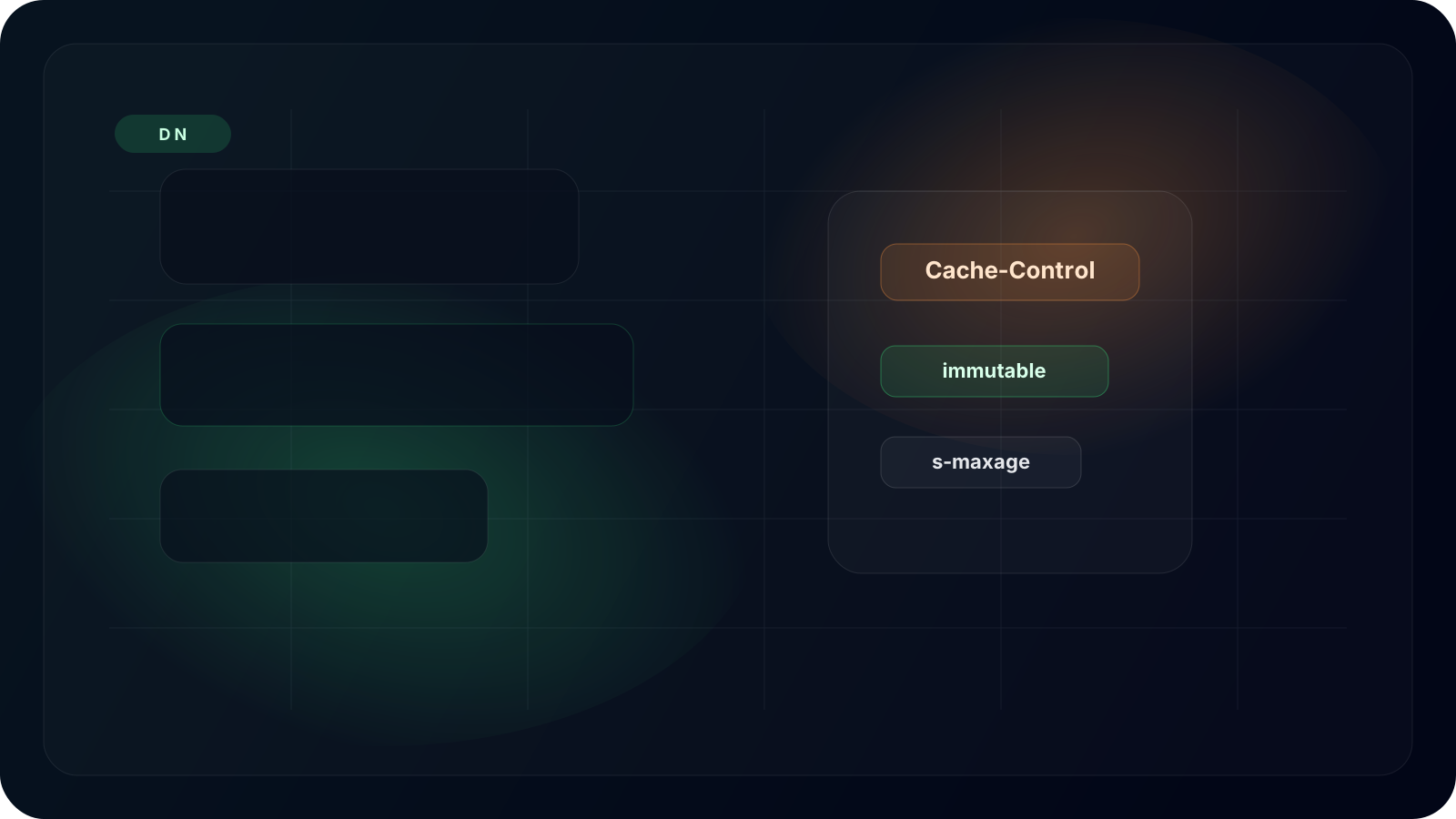
Static publishing gets fast when cache policy is explicit, not accidental. This guide turns Cloudflare Pages headers, Origin Cache Control, immutable assets, and revalidation into a practical playbook for editorial teams.
A strong developer workstation is not about collecting tools. It is about reducing friction across terminals, editors, containers, and repeatable daily flows.
Sending unpublished drafts to a third-party translation API may be convenient, but it is not always the right editorial or legal default. This workflow keeps translation closer to your pipeline without sacrificing speed.
VS Code can leak secrets through launch configs, shell history, synced settings, and careless workspace habits. This guide shows how to lock it down without slowing down your workflow.

Tool-using AI apps are powerful, but the real risk is not the model alone. It is the invisible handoff between prompts, tools, permissions, and human approval. This playbook maps the boundary correctly.

New evaluation work shows that the quality of tool descriptions changes agent efficiency, execution cost, and task success. In other words, weak MCP tool descriptions are not cosmetic debt. They are system behavior debt.
Cross-lingual retrieval still breaks in subtle ways. Recent research keeps showing the same pattern: multilingual RAG systems can prefer the query language, mishandle conflicting context, and quietly hide better evidence in another language.
Keyword search alone is not enough for a serious bilingual publication. This blueprint combines Pagefind with multilingual embeddings so English and Arabic discovery stays fast, relevant, and operationally sane.
User prompts are no longer the only place agents get poisoned. New benchmark work and recent security papers show that skill files, tool instructions, and agent-side context packages are now a serious injection surface.
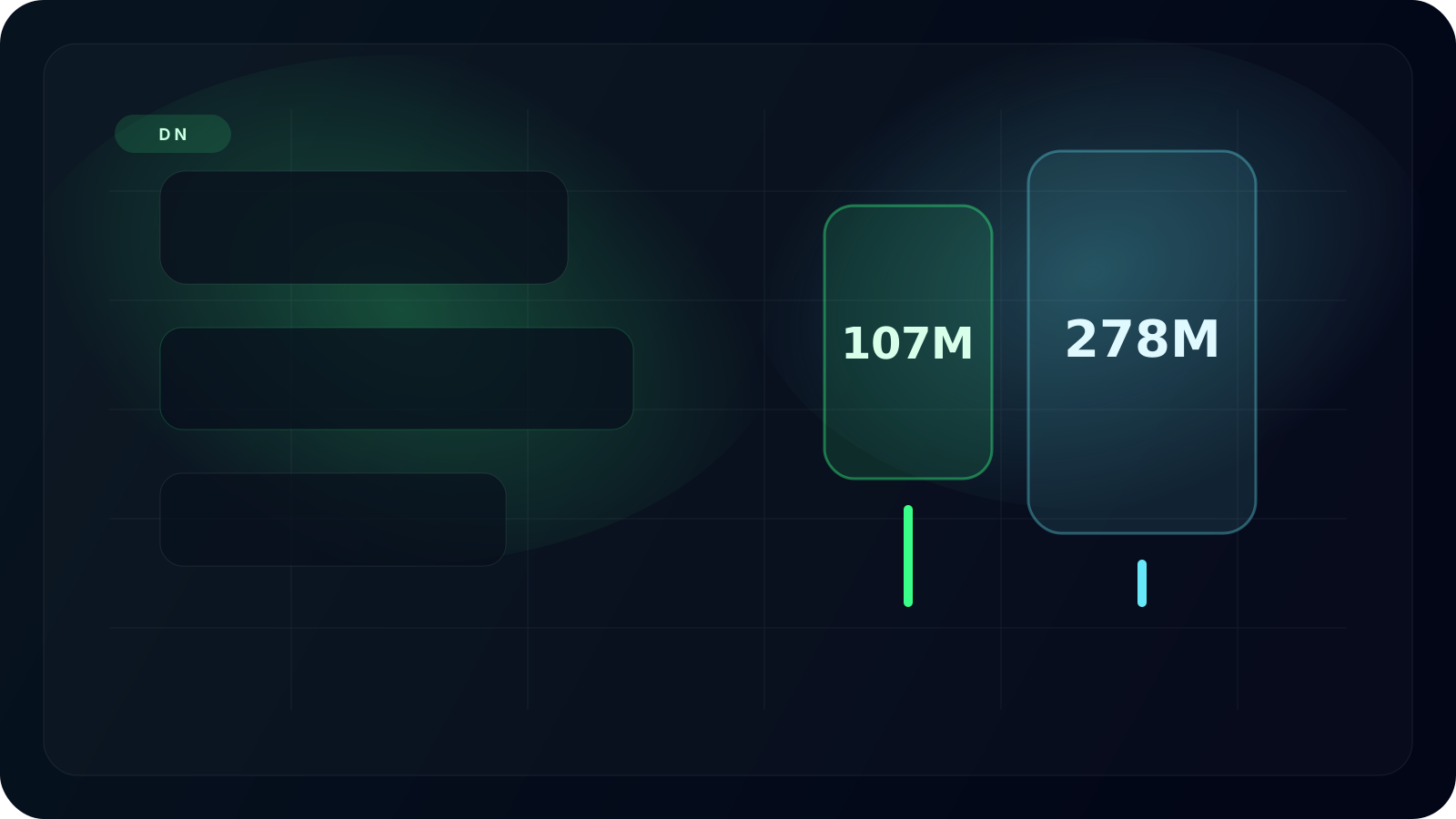
Big demos attract attention, but production retrieval keeps rewarding discipline. Recent research and current Hugging Face model activity both point in the same direction: smaller multilingual retrievers plus strong lexical baselines often beat bloated stacks where it counts.