Some models win benchmarks. Others win real systems.
IBM’s granite-embedding-107m-multilingual belongs to the second category. It
does not try to dominate by raw size. It wins by being the kind of model a team
can actually deploy, evaluate, and keep alive inside a multilingual publication
without turning search into an operations burden.
What makes the 107M variant interesting
The appeal starts with restraint. According to current Hugging Face metadata, the
model is an xlm-roberta-based multilingual embedding model at roughly 107M
parameters, with support across languages including English and Arabic.
That matters because most editorial stacks do not need the largest possible retriever. They need something smaller and more disciplined:
- easy to run inside CI or build-time pipelines
- realistic to test across locales
- fast enough for repeated indexing or similarity passes
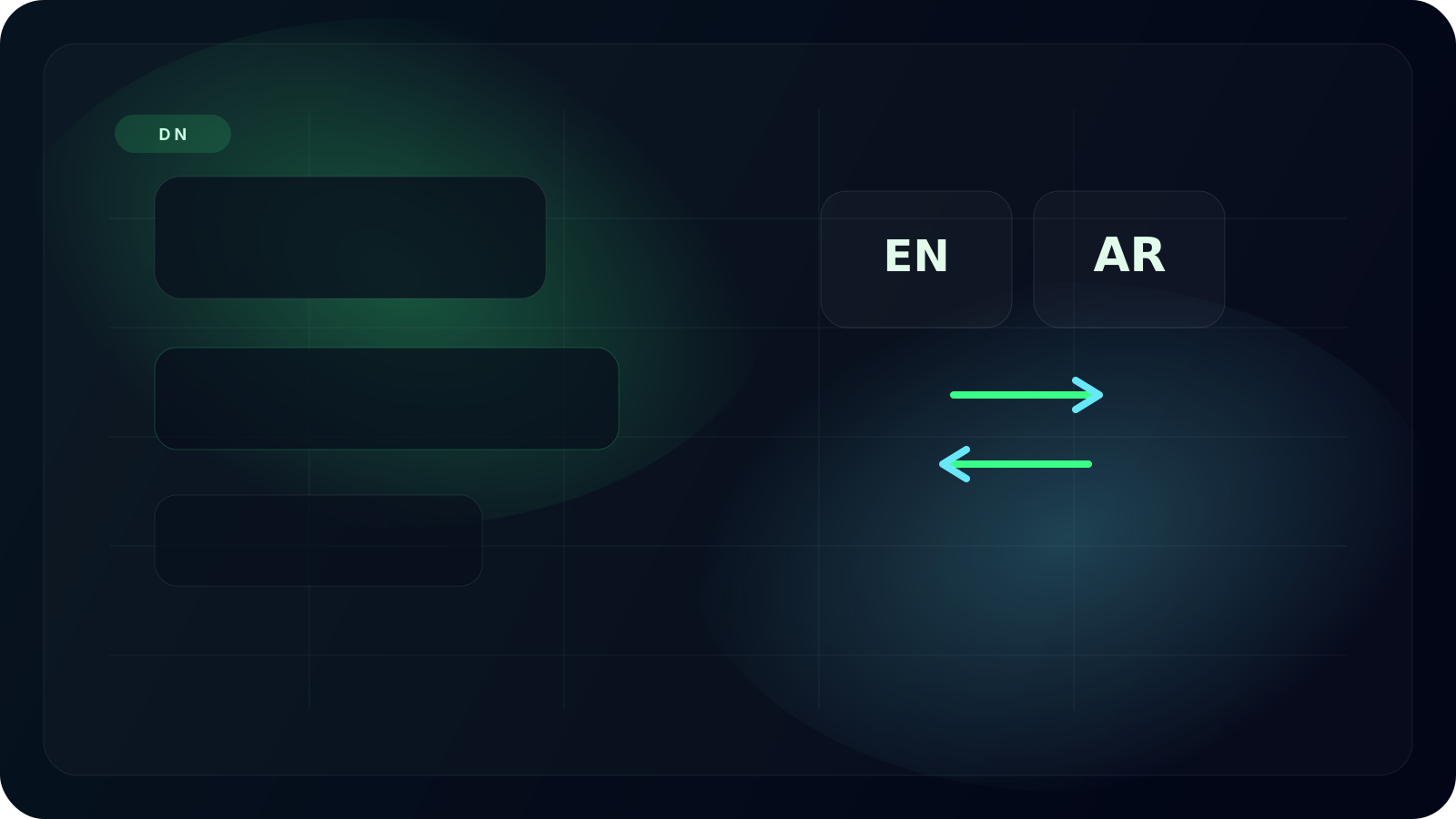
- multilingual enough to surface related content across English and Arabic
That is where a compact retriever becomes strategically valuable.
Where it fits best
I would not describe Granite 107M as a universal answer for all retrieval problems. I would describe it as an extremely strong fit for:
- related-articles ranking
- multilingual archive search sidecars
- tag and category enrichment
- content-gap audits between locales
- editorial recommendation systems
Those are the tasks where model practicality matters at least as much as peak benchmark ambition.
Why the smaller model often wins in publication workflows
In a newsroom or technical publication, every extra ounce of model complexity has an operational cost:
- more memory pressure
- slower rebuilds
- harder experimentation
- more friction when you need to run the same process across both locales
The 107M class keeps that cost in check. That is why I find it more compelling than teams often expect.
But should you use 107M instead of 278M?
Not automatically.
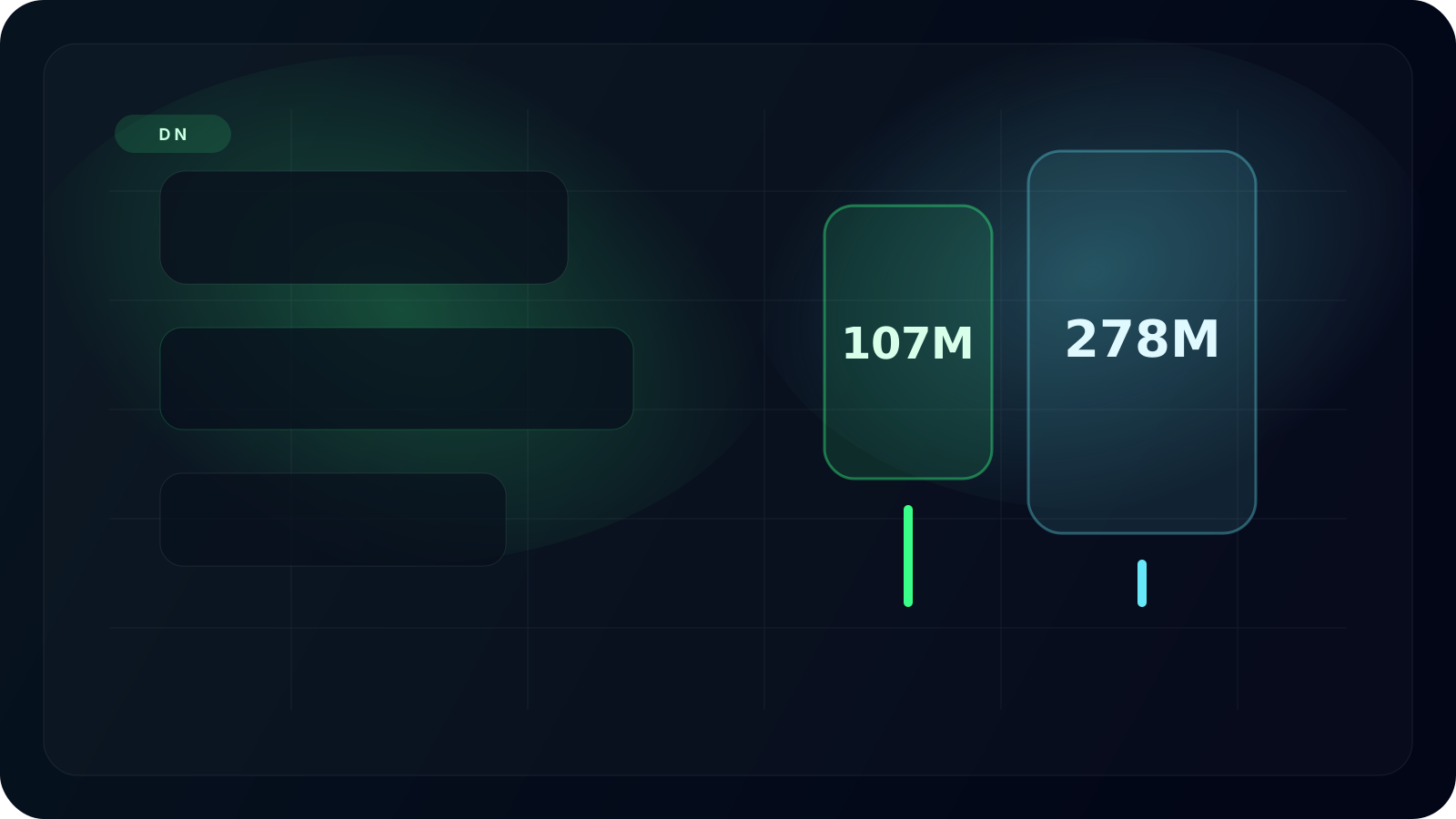
The 278M Granite multilingual model is clearly the more ambitious sibling, and
current Hub metadata shows it is also widely used. If your query set is difficult
enough or your recall requirements are punishing, the larger variant may justify
its cost.
The right question is not “Which one is better in the abstract?” It is “Which one is better for the retrieval surface we actually run?”
If your task is:
- archive search under tight latency
- build-time related-content generation
- multilingual similarity with a moderate corpus
then the 107M model often looks like the more professional choice, not the
weaker one.
What still needs work around the model
Like every embedding model, Granite 107M becomes meaningfully stronger when the surrounding pipeline is well designed:
- lexical search should still exist
- taxonomy signals should still inform ranking
- evaluation needs both English and Arabic queries
- the archive itself needs strong titles, excerpts, and tags
If those layers are weak, no embedding model will rescue the whole experience.
Pros
- Compact enough to fit real editorial pipelines without operational drama
- Multilingual support makes it immediately relevant for English and Arabic retrieval
- Strong fit for related-content systems, archive search sidecars, and similarity ranking
Cons
- Still needs lexical search and editorial signals around it for best results
- May lose to larger models on harder recall workloads if you have a very demanding corpus
- Quality depends heavily on how well the archive itself is structured
Final verdict
Granite Embedding 107M Multilingual earns a high score because it behaves like a professional tool, not just an interesting model. It is multilingual, compact, serious, and much closer to production reality than many heavier alternatives people chase by default.
If your goal is to build durable bilingual retrieval for an editorial product, it is one of the most practical open choices available right now.